Home › Training, Behavior & Exercise
Beagle Recall Training: Can Beagles Go Off-Leash? (And How to Train “Come”)
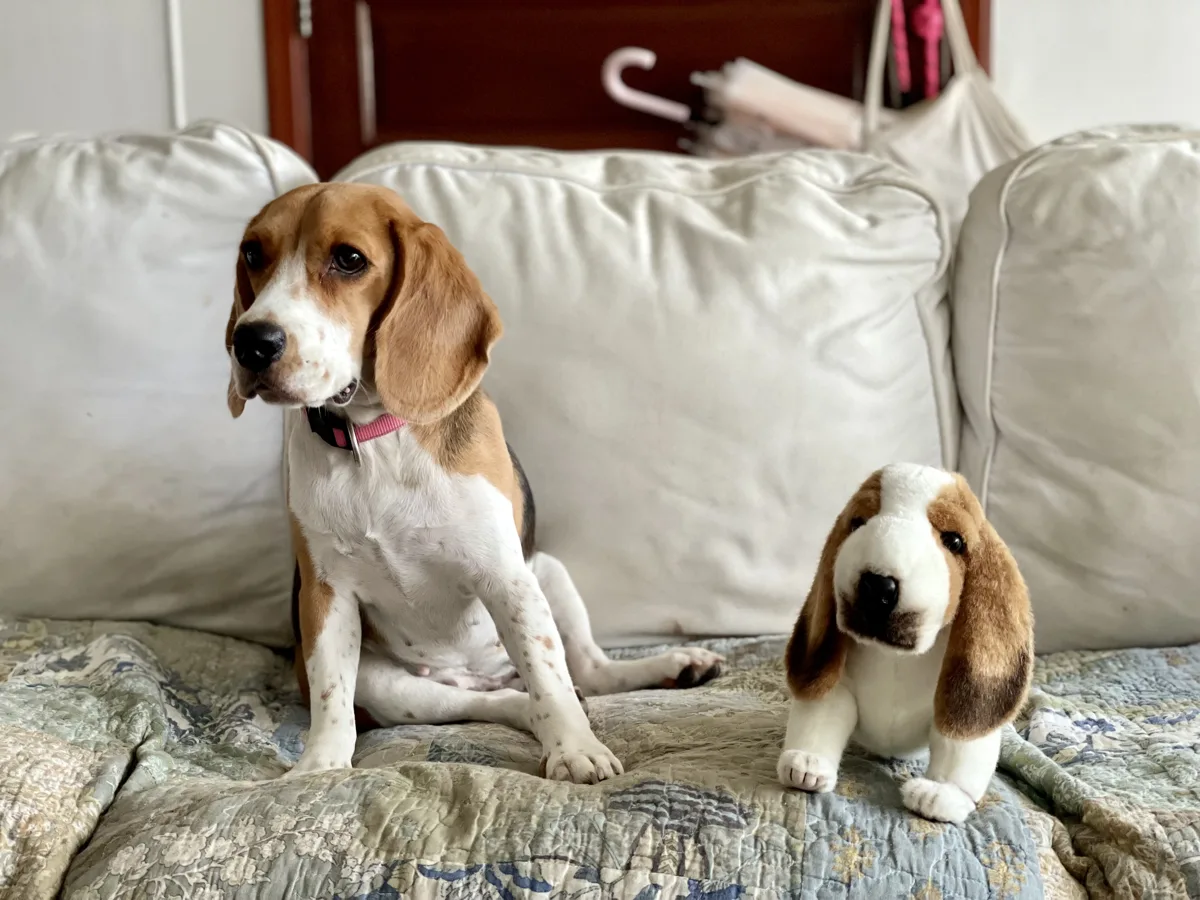
Photo: Slyronit via Wikimedia Commons, CC BY-SA 4.0
🐾 Getting ready for a puppy? Try the interactive Beagle puppy checklist — free, no email required.
Yes, you can train a Beagle to come when called—and you absolutely should. No, most Beagles cannot be safely trusted off-leash in unfenced areas near roads, wildlife, or distractions.
That sounds like a contradiction until you understand how a Beagle’s brain works. When your Beagle locks onto a fresh rabbit trail and ignores you calling their name, they are not being spiteful or “stubborn.” According to the National Beagle Club of America’s illustrated breed standard, the Beagle is a small scent hound bred to track rabbit and hare as the hunter follows on foot—trotting nose to the ground, circling, nosing under brush, and, once the trail is found, taking off in hot pursuit for what can be hours of hunting. Once that scent switch flips on, your voice drops straight to the bottom of their priority list.
Good Beagle recall training is built on two pillars: honest management (using fences and long lines so a slip-up never turns into a tragedy) and scent-hound-smart training (making coming back to you more rewarding than the grass they are sniffing). Here is how to build a recall your Beagle actually wants to answer.
Why Recall Is Harder for Beagles Than Other Breeds
Beagles were bred to put their nose down, work the trail, and tell you where it goes—the NBC describes the Beagle signaling with a full-voiced cry once the trail is found. VCA’s Beagle profile puts it bluntly: the breed likes to follow its nose, tends to wander, and does not come when called.
Even their anatomy is built for scent-first focus. The National Beagle Club of America notes that large, open nostrils are critical for scenting and that ear length is important for gathering scent in the field. The AKC adds that hounds are single-minded when in pursuit of prey, and its Beagle trail advice describes Beagles as single-minded when doing their job.
That is why treating recall as a test of “obedience” backfires. You are not trying to erase generations of scent-hound instinct. You are teaching your Beagle that interrupting a sniff to check in with you pays off every single time.
Off-Leash Reality Check: Management Comes Before Training
Before you teach a single cue, set realistic safety boundaries:
- Unfenced areas near traffic or wildlife: Keep your Beagle on a standard leash or a long line. VCA says no recall is perfect, so keep your dog on leash if there is any chance a large animal or vehicle could cross their path. The National Beagle Club’s FAQ likewise says Beagles should not be off lead outdoors unless confined to a safely fenced area or afield hunting.
- Fully fenced yards and private fenced fields: Great places to practice off-leash recall once your fence is truly Beagle-proof. (If your hound is an escape artist, check our guide on Beagle fencing and escape prevention.)
- Safe “freedom” anywhere else: The AKC suggests a long-line leash of 15 to 20 feet in larger, more distracting areas like a park, which gives your Beagle room to roam and sniff while keeping a physical safety net attached. Respect local leash laws wherever you go.
As the American Veterinary Society of Animal Behavior (AVSAB) emphasizes in its position statement on humane dog training, management strategies—arranging the environment so your dog is set up to make appropriate responses—have a vital role in dog training.
Gear You Need for Beagle Recall Training
You do not need a closet full of gadgets, and you should skip prong collars, choke chains, and shock collars. The AVSAB position statement on humane dog training says reward-based techniques should be used and aversive methods should not be used in dog training, noting that dogs trained with aversive methods showed stress-related behaviors and that the cue itself can become aversive—the exact opposite of what you want when calling your Beagle back.
Instead, gather these four basics:
- A secure, well-fitted harness: VCA recommends a harness and long line, as needed, to keep your puppy safe during recall training. Look for a comfortable, escape-resistant fit. See our best harness for Beagles guide for fit tips.
- A 15- to 20-foot long line: That is the length the AKC suggests for practicing in bigger spaces. Waterproof biothane is easy to wipe clean after wet grass. Our pick is listed below.
- A dedicated recall whistle (optional): VCA notes you can introduce a unique non-verbal sound such as a whistle as training progresses. A whistle sounds the same whoever blows it, even when you are nervous or frustrated.
- A clip-on treat pouch and truly high-value rewards: Ordinary kibble rarely beats a rabbit trail. The AKC suggests high-value treats like chicken, cheese, or freeze-dried beef liver for recall. (Because Beagles gain weight easily, keep pieces tiny and factor them into your dog’s daily food; see Beagle obesity and food motivation for smart treat habits, and ask your veterinarian if your Beagle has dietary restrictions or sensitivities.)
Step-by-Step: How to Train a Reliable Beagle Recall
Plan for short, upbeat sessions—just a few minutes at a time—and progress only when your Beagle is succeeding easily at the current step.
Step 1: Pick a Fresh Cue (Don’t Use a “Poisoned” Word)
If you have already yelled “Come!” ten times at the park while your Beagle ignored you, that word may have lost its meaning—trainers call this a poisoned cue, as the American Kennel Club (AKC) explains. The AKC’s fix is to change to a new verbal cue and start fresh from the beginning.
Pick a brand-new word you do not use in everyday chatter (like “Here!” or “Close!”), or pair a fresh word with a whistle. Say it once in a cheerful, upbeat tone.
Step 2: Charge the Cue Indoors
Start in a quiet room with zero distractions.
- Say your recall cue (or blow two short pips on your whistle) while standing right next to your Beagle.
- The instant they look at you, deliver a burst of high-value treats—one after another for a few seconds—plus warm praise.
- Repeat this a handful of times over a couple of days until the sound alone makes your Beagle’s head snap toward you with excitement.
Step 3: Turn Recall Into a Scent-Friendly Game
Beagles love motion and sniffing, so build both into your early practice. The AKC’s recall guide and VCA Animal Hospitals describe simple games that make coming to you feel like winning:
- Restrained Recall (Two-Person Game): One person gently holds your Beagle’s harness while you show the reward, walk a few steps away, and call your cue. Your partner lets go, and you throw a mini-party the second your Beagle reaches you. VCA advises stopping and consulting a positive-reinforcement trainer if your puppy shows any fear of being handled or restrained.
- Hide-and-Seek Indoors: Duck behind a doorframe or couch and call your Beagle. Let them use their nose to find you, then reward heavily. Turning yourself into the scent puzzle taps directly into their favorite instinct.
- Treat-Toss Ping-Pong: Toss one treat a few feet away. The moment your Beagle eats it, say your cue. When they turn and run back, drop a treat right between your feet so they learn to come all the way in.
Step 4: Add the Collar/Harness Grab
Many Beagles learn to run close to you, snatch a treat, and dart away before you can clip the leash. Fix that early.
As VCA Animal Hospitals advises, gently touch your Beagle’s collar while they are eating the reward, then build up to holding it for a few seconds. The AKC recommends practicing “collar grabs”: take hold of the collar, give a treat, and let your dog go back to having fun. Occasionally clip the leash on, give another treat, and immediately unclip it to let them go back to sniffing. That way, grabbing the harness does not mean “the fun is over.”
Step 5: Move Outdoors on a Long Line
Take the game to a quiet fenced yard or a low-distraction park on your 15- to 20-foot long line.
- Time your cue for transition moments: Do not call your Beagle when their nose is glued to the most fascinating bush in the county—the AKC advises against calling a dog who is busy chasing squirrels, because there is a good chance they will ignore you. Wait until they lift their head, pause between patches, or glance in your direction—then call.
- Reward voluntary check-ins: Any time your Beagle looks back at you on their own during a sniff walk, mark it with praise and a treat. The AKC recommends rewarding eye contact and moments when your dog chooses to be close to you.
- Never reel them in like a fish: VCA calls the harness and leash a safety belt and advises resisting the urge to use the leash to pull your dog to you when you call. If your Beagle ignores your cue, do not keep repeating the word or yank them back. Walk closer, gently get their attention with a clap or a quick jog backward, and make the next repetition easier (less distance, fewer distractions).
For more on building great sniffing habits on a long line, see Walking a Beagle: Leash and Long-Line Sniff Walks.
Step 6: Build an “Emergency Recall” Word
Keep one separate, sacred cue—like “Jackpot!” or a unique whistle pattern—strictly for emergencies. VCA describes this “emergency magic word”: say it in a loud, cheerful voice and immediately scatter a pile of your dog’s very favorite treats around your feet, and keep it strong by practicing a few times a week when there is no emergency. Never use this word for bath time, nail trims, or leaving the park.
5 Common Mistakes That Ruin Beagle Recall
- Calling your Beagle to end the fun: If “Come!” always means getting put in the bathtub, clipped to leave the park, or put in the crate, your Beagle will start treating the cue like a trap. The AKC suggests randomly recalling your dog while fun is happening, rewarding, and releasing them to go play again, and also says never to call your dog for things like baths, nail clipping, or medicine.
- Scolding a slow return: If your Beagle blows you off for two minutes and finally trots back, swallow your frustration and reward them anyway. As the AKC points out, dogs live in the moment—scolding a dog who just came back teaches them they should probably stay away next time.
- Chasing a loose Beagle: The AKC warns that chasing is likely to make your dog continue the “game” by moving away from you. Instead, crouch down, clap, make a silly high-pitched sound, or run away from your Beagle to inspire them to chase after you.
- Repeating the cue over and over: Saying “Come, come, come, COME!” teaches your Beagle that the first three times are optional background noise. Say it once. The AKC notes that if you have to repeat your recall cue, the environment may be too distracting for your dog’s current skill level.
- Skipping scent outlets: A Beagle who never gets to use their nose on purpose will go looking for ways to use it on their own. The AKC suggests activities such as tracking or scent work to let Beagles use their natural skills. Pair recall practice with structured sniffing games at home—our guide to Beagle enrichment: puzzle feeders and scent games has easy ways to tire out that nose indoors.
When to Call a Veterinarian or Certified Trainer
If your Beagle suddenly stops responding to cues they used to know well, schedule a checkup with your veterinarian first. Ear infections are painful, VCA notes that breeds with large, floppy ears are more prone to them, and deep infections can even damage hearing. Pain or hearing changes can make a dog seem “stubborn” when they genuinely cannot hear you or are sore when running back. You can also review our Beagle ear care basics and Beagle senior care basics guides for early signs to watch for.
If your Beagle is healthy and you want hands-on help proofing recall around distractions, look for a reward-based trainer who avoids the aversive tools listed in the AVSAB humane training position statement.
Raising a new hound? Grab our Free Beagle Puppy Checklist to keep your first-month training, gear, and vet milestones organized from day one, and see Your Beagle Puppy’s First Week at Home for a gentle day-one routine.
Recall training gear picks
We describe what to look for in each type of product. Affiliate product links, when present, are marked as sponsored.
Pick 1
Viper Biothane Working Dog Lead, 20 ft long line (1/2-inch, black)
Best for: Beagle owners practicing recall in open areas who want a waterproof long line within the AKC’s suggested 15-to-20-foot range
What to look for:
- Biothane waterproof coated webbing that wipes clean, per Viper
- Solid brass hardware
- Clip it to a well-fitted harness; the listing notes it is not chew-proof and not for tie-outs
Pick 2
ACME 210.5 ALPHA dog training whistle
Best for: Owners adding a whistle recall cue that sounds the same whoever blows it
What to look for:
- Standardized single frequency, per the listing, so family members’ whistles match
- BPA-free plastic with an all-over comfort grip, made in the UK
- Pair the sound with high-value rewards indoors before using it outside
Pick 3
PetSafe Treat Pouch Sport (standard, black)
Best for: Anyone who needs fast, one-handed access to rewards during recall practice
What to look for:
- Hinged pocket stays open and closes with a touch
- Divided treat pocket plus a front pocket for phone or bags
- Belt clip and detachable, adjustable belt
Pick 4
Stewart Freeze-Dried Beef Liver Dog Treats (14 oz tub)
Best for: Training sessions that need a single-ingredient, high-value reward like the freeze-dried liver the AKC mentions
What to look for:
- 100% beef liver and nothing else, per Stewart
- Break pieces small and count them in your Beagle’s daily food
- Ask your veterinarian first if your dog has a special diet or health condition
Sizes, colors and availability change, so check the retailer's page for current details before you buy.
Frequently asked questions
Can a Beagle ever be trained to go off-leash?
Some Beagles build a good recall in fully fenced spaces, especially when training starts young and stays reward-based. But the AKC notes that hounds are single-minded when in pursuit of prey and that some dogs should never be completely trusted off leash, and the National Beagle Club of America’s FAQ says Beagles should not be off lead outdoors unless they are in a safely fenced area or afield hunting. Outside a fence, use a leash or long line and follow local leash laws.
Why does my Beagle come inside the house but ignore me outside?
Indoors, the scent environment is familiar and boring. Outdoors, every breeze and blade of grass carries fresh scent trails that your Beagle’s brain is wired to prioritize. Bridge the gap gradually: move from the living room to a fenced yard, then to a quiet park on a long line, rewarding heavily at every step. VCA notes it can take many weeks or months of practice before a dog is ready to respond to a recall cue around distractions.
What is the best age to start recall training a Beagle puppy?
Start the day your puppy comes home; VCA says recall training should begin the moment you bring your puppy home, practiced inside or in a safe fenced area or on a leash. Young puppies tend to follow their new people closely, which makes it an easy window to build a joyful habit of running to you. Keep sessions short and upbeat.
Does a whistle work better than calling a Beagle’s name?
It can be a useful addition. VCA notes that as training progresses you can introduce a unique non-verbal sound such as a whistle, and a whistle sounds the same no matter who blows it or how frustrated they feel. Teach it exactly like a verbal cue: pair the sound with high-value rewards before you rely on it outdoors.
Should you use an e-collar or shock collar to train Beagle recall?
The American Veterinary Society of Animal Behavior (AVSAB) says aversive methods should not be used in dog training and lists electronic shock collars, prong collars and choke chains among tools to avoid. AVSAB notes recall training is the most common reason owners use shock collars, yet studies it cites found no difference in effectiveness between shock collars and reward-based methods for teaching recall. A long line paired with high-value rewards keeps your Beagle safe while you train.
What should I do if my Beagle slips their leash and runs?
Do not chase them; the AKC warns that chasing is likely to make a dog keep the game going by moving away from you. Instead, call your emergency recall cue, crouch low, or run in the opposite direction while clapping or squeaking a toy to draw them back toward you. Once you have them safely, reward them calmly without scolding.
A quick note: this guide is general information from published sources, written by dog lovers, not a veterinarian. Your own vet knows your dog's history, so check with them before changing food, exercise or treatment.
Sources
- AKC: How to Train a Reliable Recall for Your Dog
- AKC: How to Make Your Dog Want to Come When Called
- VCA Animal Hospitals: Training Your Puppy to Come or Recall on Cue
- VCA Animal Hospitals: Beagle breed profile
- AVSAB: Position Statement on Humane Dog Training (2021 PDF)
- National Beagle Club of America: Illustrated Breed Standard
- National Beagle Club of America: Beagle FAQs (archived club page)
- AKC: Busy Beagle Hot on a Trail
- VCA Animal Hospitals: Ear Infections in Dogs (Otitis Externa)
- Viper K9: Biothane Working Dog Lead 20ft
- ACME Whistles: 210½ ALPHA
- PetSafe: Treat Pouch Sport
- Stewart Pet: Freeze-Dried Dog Treats – Beef Liver
Keep reading
Walking a Beagle: Leash and Long-Line Sniff Walks
Safe Beagle walks with leash or long line—AKC containment and trail focus plus VCA exercise needs—without free roam or gear 'lab tests.'
Beagle Fencing and Escape Prevention for Nose-Driven Hounds
Why Beagles need secure fencing—VCA escape and boredom notes plus AKC containment guidance—without brand rankings or invented fence heights.
Best Harness for Beagles: How to Fit a Nose-First Puller (Plus 4 Picks)
How to choose the best harness for a Beagle: shoulder-friendly fit, front and back leash rings, escape checks, sizing by rib cage, safe leash habits, and four harnesses worth a look.
Beagle Enrichment: Puzzle Feeders and Scent Games
Puzzle feeders and scent enrichment for food-motivated Beagles—calorie awareness from VCA and AAHA, with links to obesity guidance and no product rankings.


Beagle Obesity and Food Motivation: Why Beagles Get Fat and What Helps
Are Beagles prone to obesity? Yes. What vets say about why Beagles get fat, how to tell if your Beagle is overweight, the health risks, and how to manage a food-obsessed Beagle's diet with your vet.