Home › Training, Behavior & Exercise
Beagle Crate Training: Size Guide, Setup, and How to Handle the Howling
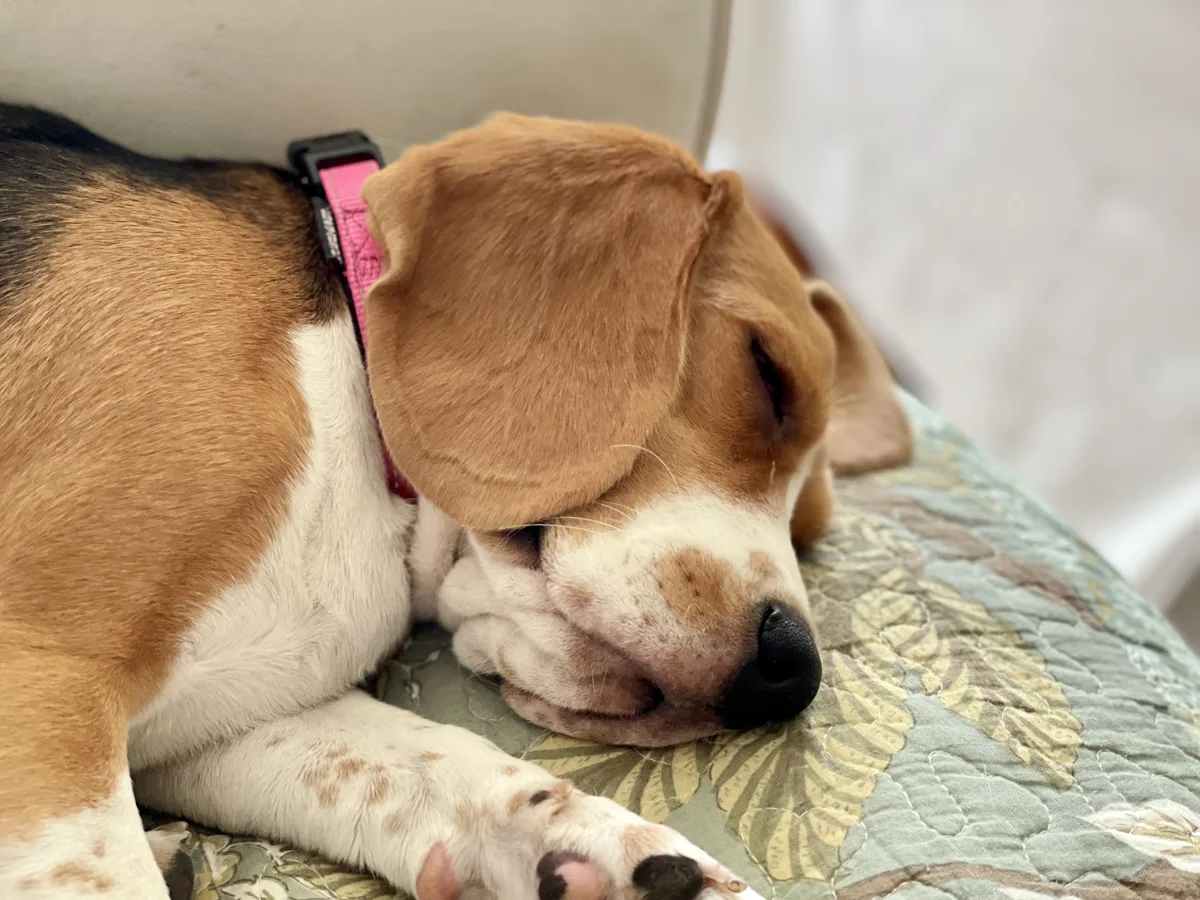
Photo: Slyronit via Wikimedia Commons, CC BY-SA 4.0
🐾 Getting ready for a puppy? Try the interactive Beagle puppy checklist — free, no email required.
Yes, you can crate train a Beagle—and when it is done slowly with food, patience, and the right size crate, most Beagles learn to treat it like a cozy, safe den rather than a jail cell. The catch is that Beagles are pack hounds bred to work in groups and use their voices, so closing the door too fast often triggers a dramatic baying concert.
If you are bringing home a new puppy, a crate is one of the most practical tools you can own for housebreaking, naps, and keeping a curious nose out of the trash when you cannot watch them. If you adopted an adult or rescue Beagle, a crate can still be a helpful resting spot—unless confinement triggers real panic, in which case you will want a different setup.
Here is how to pick the right crate for a 13-inch or 15-inch Beagle, introduce it step by step, and tell the difference between normal protest grumbling and true distress.
Why Crate Training a Beagle Feels Different
Every dog breed has its own personality quirks, and Beagles bring three specific ones to the crate:
- Pack instincts: The AKC notes Beagles were bred to hunt in packs, so they enjoy company. Being shut away in a quiet back room while the family is laughing in the living room feels unnatural to them at first.
- Big voices: A Beagle who wants out does not just whimper quietly. They can produce a full-throated bay that makes you worry the neighbors are calling animal control.
- Relentless noses: If there is a crumb on the kitchen floor or a squirrel outside the window, a Beagle wants to investigate. A crate keeps them safe from counter-surfing, trash raids, and chewing things they should not swallow while you are busy or asleep.
The good news? Beagles are also famously food-motivated—VCA describes their strong appetite and food motivation. That makes positive-reinforcement crate training much easier once you make the crate the place where the best snacks happen.
What Size Crate Does a Beagle Need?
The American Kennel Club (AKC) recommends a crate that is just large enough for your dog to stand up, turn around, and lie down comfortably.
Because the National Beagle Club of America breed standard recognizes two size varieties—13-inch (not exceeding 13 inches in height) and 15-inch (over 13 but not exceeding 15 inches)—you will want to measure your actual dog rather than guessing. If you are still figuring out how big your pup will get, check our guide on Beagle Weight by Age: 13-Inch vs 15-Inch Size.
How to Measure Your Beagle for a Crate
MidWest’s crate sizing guide suggests two measurements:
- Length: Measure from the tip of their nose to the base of their tail (not the tip of the tail), then add a few inches.
- Height: Measure from the floor to the top of their head while standing, then add a few inches for clearance.
If you are buying for a young puppy, choose a crate sized for their expected adult size that comes with a removable divider panel. The AKC explains that if a crate is too large, a puppy can eliminate in one end and sleep in the other; a divider lets the crate “grow” with your dog.
Choosing the Best Type of Crate for a Beagle
Not all crates hold up equally well to a determined hound. Here is how the main styles compare, based on VCA’s crate overview:
- Wire crates (popular for home use): Wire crates offer great airflow, fold flat for storage, and usually include a removable divider and slide-out plastic pan for easy cleanup. Look for double doors (front and side) so you can fit the crate into tight corners, and sturdy slide-bolt latches that a clever paw or nose cannot nudge open. VCA cautions that dogs who chew the wires can injure their teeth or jaws, and that wire crates are not sturdy enough to protect a dog during car travel.
- Hard plastic travel crates (best for car rides and den-lovers): Plastic crates feel darker and more enclosed, and VCA notes the reduced visual stimulation may reduce over-arousal and fear. They can be used for airline travel and provide moderate protection during car travel. The downside is less airflow in warm rooms and no adjustable divider for growing puppies.
- Soft-sided fabric crates (skip for puppies and chewers): Fabric crates are lightweight for travel with an already crate-trained adult, but a bored Beagle puppy can chew through mesh quickly.
Crate Setup Basics
- Location matters: Start with the crate in a room where your family actually hangs out—like the living room or kitchen—during the day, and move it (or keep a second crate) in your bedroom at night, as VCA suggests. Putting a brand-new Beagle puppy alone in a dark laundry room is a fast track to howling.
- Skip fluffy beds at first: The AKC notes many puppies prefer to potty on soft, porous surfaces like beds and blankets. Start with a flat, washable crate mat—or even just the bare plastic pan—until your Beagle is reliably housebroken and past the fabric-chewing stage.
- Remove the collar: The AKC advises always taking your dog’s collar off in the crate for safety. Take off the harness too—tags and buckles can snag on wire bars.
- Consider a light cover: Draping a breathable sheet or crate cover over the top and sides can help some Beagles settle by blocking visual distractions—just make sure there is plenty of ventilation and your dog is not pulling fabric through the bars.
Step-by-Step Beagle Crate Training Plan
According to VCA Animal Hospitals, positive reinforcement training is the best way to help your dog adapt to the crate, and your dog should have had exercise and a chance to eliminate before each session. Move at your Beagle’s pace. If they back away or start barking, you moved a step too fast.
Step 1: Make the Crate Rain Treats (Door Wide Open)
Tie or prop the crate door open so it cannot accidentally swing shut and startle your Beagle. Toss a few pieces of kibble or smelly training treats just inside the entrance. Let your Beagle sniff, walk in, eat, and walk right back out on their own. Repeat this a few times a day until they trot in without hesitation.
Step 2: Feed Meals and Give Special Chews Inside
Start serving meals inside the crate. If your Beagle is hesitant, place the bowl near the doorway and inch it farther back over a few meals. You can also reserve a high-value food-stuffed toy or lick mat only for crate time so your hound starts associating the crate with their favorite activity. (Need ideas? See our guide to Beagle Enrichment: Puzzle Feeders and Scent Games.)
Step 3: Practice Closing the Door Briefly
Once your Beagle happily walks in to eat or lick a stuffed toy, gently close the door while they are busy—and stay sitting right next to the crate. Open the door before they finish and before they start fussing. Gradually build from a few seconds to a couple of minutes.
Step 4: Add Distance, Then Short Departures
When your Beagle stays calm with the door closed while you sit nearby, stand up, take a few steps away, and come right back to reward them. Slowly work up to walking out of sight into another room for a minute or two, then returning calmly. VCA suggests watching the first few real alone-time sessions on a camera to make sure your dog is not in distress.
Step 5: Add a Cue and Calm Exits
Once your Beagle is trotting into the crate reliably, say a simple cue like “crate” or “kennel” right before they step in, then reward. When it is time to come out, wait for a brief moment of quiet and four paws on the floor before opening the door so they learn that calm behavior—not pawing or baying—opens the latch.
If you are juggling crate training alongside everything else in those chaotic early days, our Your Beagle Puppy’s First Week at Home guide and our Free Beagle Puppy Checklist can help you keep your daily routine simple.
How to Handle Beagle Howling in the Crate
Every Beagle owner hits this moment: you close the crate door, walk away, and your sweet little hound unleashes a sound that could wake the next zip code.
Before you react, figure out why they are vocalizing:
- They need a potty break: If your Beagle has been resting quietly for a while and suddenly starts whining or barking, take them straight outside on a leash to their potty spot. Keep it boring—no playtime, no excited chatter—and return calmly to the crate afterward.
- Normal protest (“Hey, I want to be with you!”): If you just took them out to potty, they had a good sniff walk, and they start grumbling within a minute of the door closing, they are usually testing whether noise brings you back. Wait for even two or three seconds of silence before opening the door so you do not accidentally teach them that howling is the magic “open” button. (The AKC adds that vocalizing within minutes of going in often signals stress, so slow your training down and add more positive crate experiences.)
- True confinement panic: If your Beagle is panting heavily, drooling, pawing frantically at the bars, biting the wire, urinating in panic, or howling non-stop for long stretches, do not let them “cry it out.”
The AKC says never to crate a dog if it causes stress or panic, and VCA Animal Hospitals advises that if your dog is very distressed, you should release them, end the session, and contact your veterinarian or a veterinary behaviorist before continuing. If you see signs of true distress, stop closing the crate door and talk with your veterinarian or a certified positive-reinforcement trainer. The Merck Veterinary Manual lists confinement anxiety among the problems to rule out when a dog struggles alone, and describes treating separation anxiety with a behavior modification plan—sometimes alongside medication prescribed by a veterinarian—rather than forcing more crate time.
For a deeper look at telling boredom apart from true anxiety, read Beagle Alone Time and Vocalizing: Boredom vs Anxiety and Beagle Howling, Barking and Scent-Driven Behavior.
Special Tip: Crate Training a Rescue or Former Lab Beagle
If you adopted an adult Beagle from a shelter, rescue, or research facility, their relationship with crates can go one of two ways:
- Some rescue Beagles feel comforted by an enclosed space because it is familiar.
- Others associate cages with stress and will panic the moment a door latches.
Give a newly adopted Beagle time to decompress before expecting them to love a closed crate. Leave the crate door tied open as an optional nap spot, or use a puppy-proofed room with a sturdy baby gate or exercise pen instead—the AKC suggests a gated-off area or exercise pen for dogs showing signs of anxiety. A Beagle does not have to be crated to be a well-behaved house dog—safety and low stress always come first.
Common Crate Training Mistakes to Avoid
- Using the crate as punishment: If you send your Beagle to the crate when you are angry about a chewed shoe, they will learn to dread it. Keep the crate strictly positive.
- Skipping exercise and sniffing first: A restless Beagle with pent-up energy will fight the crate. Take them for a leash or long-line sniff walk and a potty break before asking them to settle.
- Leaving them in too long: VCA notes that extended periods of confinement are not healthy for dogs, and the AKC says never to crate a dog longer than they’re comfortable or can hold their bladder. Always plan your schedule around your Beagle’s age, bladder control, and need for movement and social time.
- Buying a crate that is way too big for a puppy: Extra space invites potty accidents in the back corner. Use a divider panel until they are reliably housebroken.
Ready to Set Up Your Beagle’s Routine?
Crate training works best when it is part of a predictable daily rhythm of sniff walks, meals, enrichment, and rest. Grab our Free Beagle Puppy Checklist to make sure you have your crate, harness, and first-week essentials ready before day one—and if your Beagle is still vocalizing when left alone, head over to Beagle Alone Time and Vocalizing: Boredom vs Anxiety for your next steps.
Crate pick
We describe what to look for in each type of product. Affiliate product links, when present, are marked as sponsored.
Pick 1
MidWest iCrate Double Door Folding Dog Crate (30-inch, model 1530DD)
Best for: Beagle owners who want a wire crate with a divider for a growing puppy; the listing also offers other lengths, so measure your dog first
What to look for:
- Includes a divider panel to adjust living space and a removable leak-proof plastic pan, per MidWest
- Front and side doors with slide-bolt latches
- Folds flat for storage; as VCA notes, wire crates aren't sturdy enough to protect a dog during car travel
Sizes, colors and availability change, so check the retailer's page for current details before you buy.
Frequently asked questions
What size crate is best for a full-grown Beagle?
Measure your own Beagle rather than going by the breed name, because the AKC recognizes two height varieties (13 inches and under, and over 13 up to 15 inches). Measure from the tip of the nose to the base of the tail and from the floor to the top of the head while standing, then add a few inches, as MidWest's crate sizing guide suggests. The AKC says the crate should be just large enough for your dog to stand up, turn around, and lie down comfortably.
How long does it take to crate train a Beagle puppy?
Every puppy is different. Humane World for Animals (formerly the Humane Society of the United States) says crate training can take days or weeks, depending on your dog's age, temperament and past experiences. Consistency, meeting their potty and sniff needs first, and never rushing the door-closing step make the biggest difference.
Should I cover my Beagle's crate at night?
A lightweight, breathable cover can help some Beagles sleep better by blocking hallway movement and morning light; the AKC notes some dogs settle better in a darker, more den-like crate, such as one with a removable cover. Just leave at least one side open for airflow, make sure the room stays cool, and remove the cover if your Beagle tries to pull fabric through the bars and chew it.
Should I put water in my Beagle's crate?
The AKC's crate-training advice says to provide water in the crate. A spill-proof, clip-on crate bowl helps keep an enthusiastic paw from turning the crate mat into a swimming pool.
Why does my Beagle howl the second I leave the room?
Beagles are pack hounds who strongly prefer company. Early howling is often a mix of FOMO (fear of missing out) and not yet knowing how to settle alone. Go back a step: practice short, calm departures of just a few seconds with a high-value food-stuffed toy, and build duration slowly. If your Beagle panics, drools, or tries to injure themselves escaping, pause crate training and consult your veterinarian.
Can I stop using the crate once my Beagle is older?
Yes. Many Beagle owners use a crate during puppyhood for potty training and safety, then gradually transition their adult Beagle to a dog-proofed room or free roam once they are reliably housebroken and past the destructive chewing phase. Even then, keeping the crate open as a cozy bed helps your Beagle stay comfortable with confinement for future vet visits, travel, or emergencies.
A quick note: this guide is general information from published sources, written by dog lovers, not a veterinarian. Your own vet knows your dog's history, so check with them before changing food, exercise or treatment.
Sources
- AKC: How to Crate Train Your Dog
- VCA Animal Hospitals: Crate Training Your Dog (An Overview)
- Humane World for Animals (formerly the Humane Society of the United States): How to Crate Train Your Dog or Puppy
- Merck Veterinary Manual: Behavior Problems of Dogs
- National Beagle Club of America: Breed Standard
- AKC: Beagle breed information
- AKC: Official Standard of the Beagle (PDF)
- VCA Animal Hospitals: Beagle breed overview
- MidWest Homes for Pets: What Size Crate Should I Get?
- MidWest Homes for Pets: iCrate Dog Crate
Keep reading

Your Beagle Puppy's First Week at Home
A calm first week with a Beagle puppy—quiet homecoming, potty rhythm, crate basics and secure fencing for a nose-driven hound.

Beagle Alone Time and Vocalizing: Boredom vs Anxiety
Beagle alone-time vocalizing explained with VCA boredom notes, separation-anxiety signs, AVMA guidance and when to call a vet or behavior professional.

Beagle Howling, Barking and Scent-Driven Behavior
Why Beagles bay, howl and follow their noses—framed with AKC and VCA guidance—and how to plan training without promising a silent dog.

Beagle Enrichment: Puzzle Feeders and Scent Games
Puzzle feeders and scent enrichment for food-motivated Beagles—calorie awareness from VCA and AAHA, with links to obesity guidance and no product rankings.


Beagle Weight by Age: 13-Inch vs 15-Inch Size
What the AKC Beagle standard says about 13-inch and 15-inch varieties, how to track growth with your vet, and why body condition matters more than a single number.