Home › Training, Behavior & Exercise
Best Harness for Beagles: How to Fit a Nose-First Puller (Plus 4 Picks)
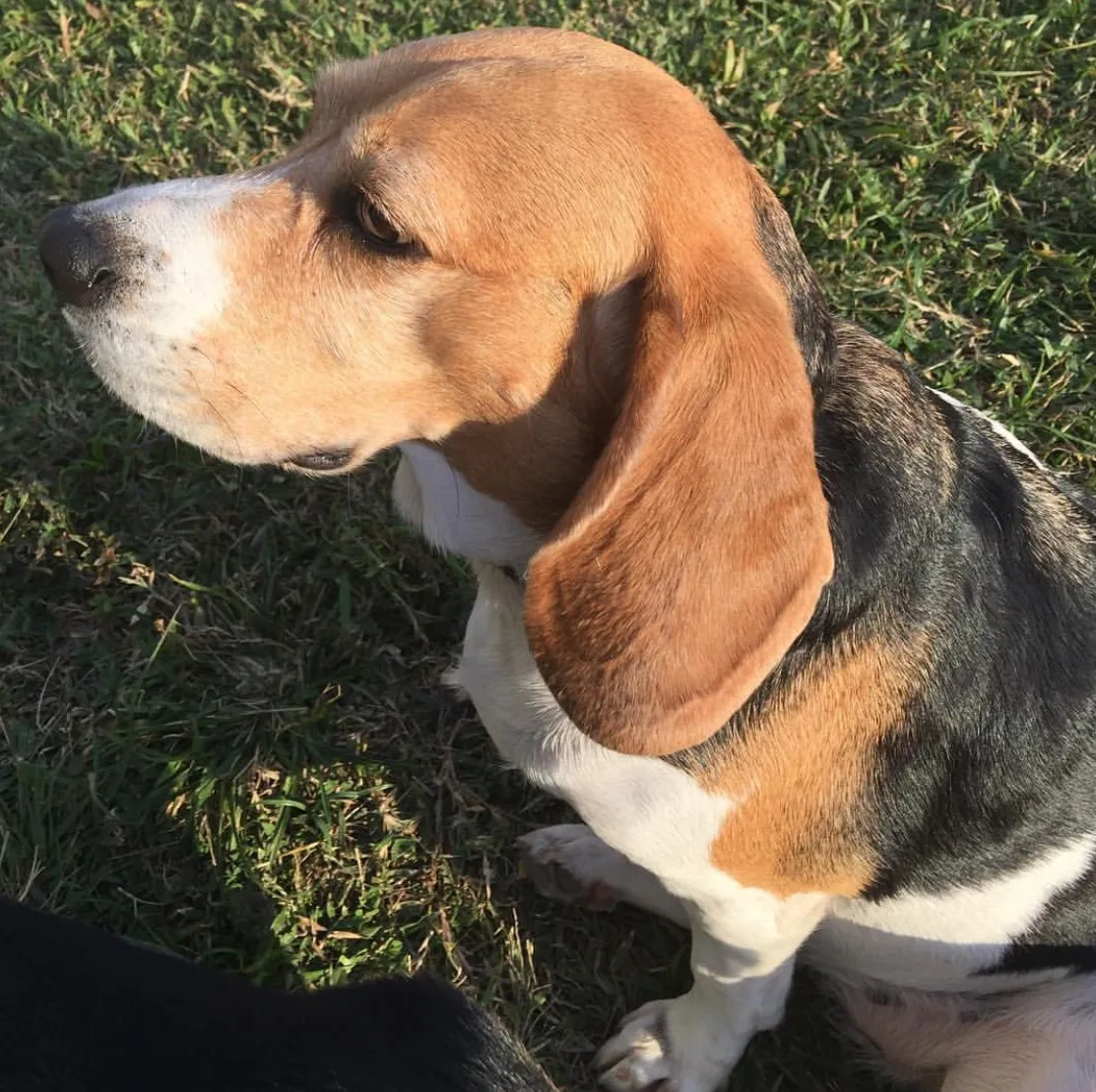
Photo: Floodmfx via Wikimedia Commons, CC BY-SA 4.0
🐾 Getting ready for a puppy? Try the interactive Beagle puppy checklist — free, no email required.
The best harness for a Beagle is one that fits snugly, leaves the shoulders free, can’t be backed out of, and has two places to clip a leash: one on the back and one on the chest. That’s the checklist VCA Animal Hospitals gives for a good harness, and it matters more for a Beagle than for most dogs, because a Beagle on a scent will lean into the leash with everything it has.
This guide covers why a harness usually beats a collar for this breed, which styles suit which Beagle, how to measure and test the fit at home, and four harnesses worth a look. We haven’t tested these harnesses ourselves. The picks list only what each maker states.
Why Beagles do better in a harness
Beagles are scent hounds first. The National Beagle Club of America says they were bred for many generations to follow a scent, and that they must be walked on leash at all times. VCA’s Beagle breed profile puts it plainly: a Beagle likes to follow its nose, tends to wander, and doesn’t come when called.
That nose-first walking style is hard on a neck collar:
- Pulling puts pressure on the neck. VCA says a collar is not the right choice if your dog pulls very hard, pulls until they cough or breathe noisily, or pulls hard enough to unbalance you. Its collar and harness guide warns that a dog pulling hard against a flat collar may put too much pressure on delicate structures in the neck.
- A harness spreads the load. The AKC says a harness puts less pressure on the neck than a collar, and that dogs who pull may benefit because a harness can help reduce the risk of neck strain or injury.
- A loose collar is an escape route. VCA notes that a collar that fits too loosely can let a dog escape. For a dog that won’t reliably come back, staying attached is the whole point.
If you’re still working on walks in general, our guide to leash and long-line sniff walks covers the bigger picture.
The Beagle shape and why you measure
The AKC Beagle standard describes a chest that is “deep and broad, but not broad enough to interfere with the free play of the shoulders,” ribs that are “well sprung,” and a neck of medium length. There are two varieties: hounds 13 inches and under, and hounds over 13 but not over 15 inches. The AKC breed page lists weights of under 20 pounds for the 13-inch variety and 20 to 30 pounds for the 15-inch variety.
Those are breed-standard figures, not a sizing guide. Two Beagles of the same height can have very different rib cages, so measure your own dog and use each brand’s chart.
Harness styles compared
| Style | How it works | Good for | Watch for |
|---|---|---|---|
| Back clip | Leash clips between the shoulder blades | Dogs that already walk well; easy to clip on | Less steering when a Beagle pulls toward a smell |
| Front clip | Leash clips at the chest and turns the dog back toward you when they pull | Beagles still learning loose-leash walking | Blue-9 says front-attachment harnesses slide to one side with strong pullers; VCA says some designs rest over the shoulder joints |
| Dual clip | Rings on both the chest and back | Most Beagles: start on the front ring, move to the back ring later | Two attachment points to check for wear |
| No-pull (tightening loop) | A loop tightens the harness a little when the dog pulls | Strong pullers; the AKC mentions handlers pushing a stroller or with a mobility issue | VCA says to be especially mindful of no-pull styles, because some can press on the front of the shoulder joint |
| Step-in | Dog steps in; it fastens on the back, nothing goes over the head | Head-shy dogs | AKC says step-ins can be harder to get out of, but only if they fit properly |
| Three-strap | A second girth strap sits farther back on the body | Escape artists | Bulkier to put on; still needs a snug fit |
A note on shoulders: VCA’s harness checklist asks for shoulder joints that move freely, “with no straps across the front of the shoulder.” When you try a harness on, watch your Beagle walk. The AKC says the movement should look natural and the harness shouldn’t interfere with the shoulders or legs.
Why the front ring matters for a food-driven dog
A 2021 study of 52 shelter dogs (Shih et al., PubMed) found that dogs pulled harder and spent more time pulling toward a food treat in a back-clip harness than in a neck collar. There was no difference when the lure was a toy. That doesn’t mean a harness is a bad idea. It means a back clip on its own gives a food-motivated Beagle a comfortable way to pull. The AKC says front-clip harnesses often work well for dogs that pull because they help redirect forward movement, and suggests starting a dual-clip harness on the front ring and switching to the back as your dog becomes more reliable.
How to measure and fit a Beagle harness
- Take two measurements. The AKC uses the base of the neck, where it meets the shoulders, and the widest part of the chest, usually just behind the front legs. A cloth tape works, or a piece of string you then measure against a ruler.
- Use the brand’s own chart and rules. Blue-9 measures the rib cage about 2 inches behind the elbow. Ruffwear measures the widest part of the rib cage, and says to size up between sizes for the Front Range but down for the Web Master. 2 Hounds Design says to choose the smallest size that fits.
- Start loose, then tighten. The AKC’s vet says the fit should be snug enough that you have to squeeze two fingers under the straps, but not so tight it’s uncomfortable.
- Check where the straps sit. Blue-9’s fitting guide says the front ring should rest near the bony part of the chest: too high can cause coughing when the dog pulls, too low lets the neck loop rotate. The strap around the ribs shouldn’t sit so far forward that it rubs the armpits, or so far back that it presses on the belly.
- Do the escape test indoors. The AKC suggests walking your dog around, gently pulling on the harness from different directions, and backing your dog up to see whether it slides over the head. If it does, tighten and test again before you go outside.
Watch your Beagle’s reaction, too. Blue-9 lists chewing at the straps, turning to bite at the harness, or flopping down and refusing to move as signs the fit needs work. The AKC adds that a harness that fits today may need adjusting if your dog’s coat, body condition or activity level changes.
Harness safety habits
- Harness on only for walks. VCA says harnesses should only be worn when the dog is on a leash, and that dogs should be supervised in collars and harnesses to avoid accidental injury. Take it off at home.
- Check the gear. The AKC recommends inspecting buckles, closures and hardware routinely for cracks, fraying or loose stitching, and keeping the harness clean.
- Check the skin. Look behind the front legs and across the chest for rubbing or irritation, which the AKC lists as something to watch for. If a sore spot doesn’t settle once the fit is fixed, ask your vet to take a look.
- Choose the right leash. VCA suggests a leash 6 to 10 feet long for everyday walks, a long line of 15 to 50 feet for safe exploring, and avoiding retractable leashes, which it says can cause serious friction burns. Long lines belong in safe, open spaces, and a secure yard still needs proper fencing.
- Puppies need refits. The AKC says a harness is generally a better option for puppies and that you should keep adjusting or replacing it as they grow. See our Beagle puppy first week guide for getting started.
Pair the harness with loose-leash training
A harness gives you control. It doesn’t teach manners on its own. VCA’s loose-leash method suits a food-motivated Beagle well:
- Start somewhere boring. Indoors or in the yard, clip on the leash, stand still and wait for even a second of slack.
- Mark and reward. Say “Yes!” the moment the leash goes loose and give a small treat near your leg. Take one or two steps, then repeat.
- Stop when the leash goes tight. Stand still or take a few steps away from whatever your Beagle wants, wait for slack, then reward.
- Let sniffing be the reward. VCA says a Beagle “prefers to walk and sniff and explore.” In our view, letting your dog go sniff after a stretch of polite walking is one of the best rewards you can offer a scent hound.
VCA says most dogs need several months of regular practice to learn loose-leash walking, so expect slow progress. Treats count toward the daily food allowance: VCA advises keeping treats to no more than 10% of daily calories, and our Beagle obesity and food motivation guide covers how to do that. If your Beagle lunges and barks at people, dogs, cars or bikes, VCA recommends asking your veterinarian for a referral to a behavior consultant. For howling and scent-driven behavior at home, see our howling and scent training guide.
Four harnesses worth a look
These four have the features above. Amazon links are in the picks box at the end of the article. Measure first, because each link opens one specific size.
1. Blue-9 Balance Harness
Blue-9 gives the Balance Harness six points of adjustment, front and back rings to help manage pulling, and a buckle on the neck loop for dogs that don’t like a harness slipped over the head. It’s made of washable soft-touch nylon. Blue-9’s sizing chart measures the rib cage about 2 inches behind the elbow: XS is 13.5 to 18 inches, S is 17.5 to 25.5 inches and M is 21 to 32 inches. With that much adjustment, it’s a good choice for a Beagle that falls between other brands’ sizes. Blue-9’s fitting guide is worth reading before the first walk.
2. Ruffwear Front Range Harness
The Front Range is Ruffwear’s padded everyday harness: foam padding, four points of adjustment, an aluminum V-ring on the back for everyday walks and a reinforced webbing clip at the chest to redirect pullers. It has an ID pocket, reflective trim and a loop for a clip-on light. Ruffwear sizes it by the widest part of the rib cage (S 22 to 27 inches, M 27 to 32 inches) and says to choose the larger size if you’re between two. Hand wash only.
3. 2 Hounds Design Freedom No-Pull Harness
The Freedom No-Pull Harness has a control loop on the back that tightens gently around the chest when the dog pulls, plus a ring on the front. The maker recommends clipping to both at once with a double-ended leash. The chest strap behind the front legs is lined with Swiss velvet to help prevent rubbing. 2 Hounds Design lists Beagles in its 5/8-inch width for dogs under 40 pounds: XS fits a 14 to 20 inch chest, Small 20 to 24 inches, and Medium 24 to 28 inches. It says to choose the smallest size that fits. Because this is a no-pull design, check it against VCA’s shoulder advice when you fit it: watch your Beagle walk and make sure the straps aren’t pressing on the front of the shoulders.
4. Ruffwear Web Master Harness (for escape artists)
If your Beagle has already wriggled out of a two-strap harness, look at a three-strap design. VCA notes that some deep-chested dogs may need a “double-H” harness to stay secure. Ruffwear describes the Web Master as a “three-strap style harness – great for houdini dogs,” with a neck buckle so nothing goes over the head, three leash points (two on the back, one on the chest), a padded lift handle and four points of adjustment. Sizes match the Front Range (S 22 to 27 inches), but Ruffwear says to choose the smaller size if you’re between two.
Bottom line
For most Beagles, start with a dual-clip harness that fits snugly, leaves the shoulders free and passes the back-up test at home. Clip to the front ring while you teach loose-leash walking, keep the harness on only for walks, and choose a three-strap style if your Beagle is an escape artist. If pulling comes with coughing, noisy breathing or a sore that won’t heal, talk to your vet.
Beagle harness picks at a glance
We describe what to look for in each type of product. Affiliate product links, when present, are marked as sponsored.
Pick 1
Blue-9 Balance Harness (buckle neck)
Best for: Beagles that are hard to fit, or that dislike a harness going over the head
What to look for:
- Six points of adjustment, front and back leash rings, and a buckle on the neck loop, per Blue-9
- Sized by rib cage about 2 inches behind the elbow: S is 17.5 to 25.5 inches, M is 21 to 32 inches. Our link opens the M
- Washable soft-touch nylon
Pick 2
Ruffwear Front Range Harness
Best for: Everyday walks when you want padding and a simple two-ring setup
What to look for:
- Foam-padded, four points of adjustment, aluminum V-ring on the back and a reinforced webbing clip at the chest, per Ruffwear
- Sized by widest rib cage: S 22 to 27 inches, M 27 to 32 inches; Ruffwear says to choose the larger size if in between. Our link opens the M
- ID pocket, reflective trim and a light loop; hand wash
Pick 3
2 Hounds Design Freedom No-Pull Harness
Best for: Strong pullers, especially with a double-ended leash clipped front and back
What to look for:
- Back control loop that tightens gently around the chest, plus a front ring, per 2 Hounds Design
- Swiss velvet-lined chest strap behind the front legs; the maker lists Beagles in its 5/8-inch width for dogs under 40 pounds
- 5/8-inch Small fits a 20 to 24 inch chest; the maker says to choose the smallest size that fits. Our link opens the Small, harness only
Pick 4
Ruffwear Web Master Harness
Best for: Escape artists that have already backed out of a two-strap harness
What to look for:
- Three-strap style that Ruffwear describes as great for houdini dogs, with a neck buckle so nothing goes over the head
- Three leash points (two on the back, one on the chest), a padded lift handle and four points of adjustment
- S fits a 22 to 27 inch rib cage; Ruffwear says to choose the smaller size if in between. Our link opens the S
Sizes, colors and availability change, so check the retailer's page for current details before you buy.
Frequently asked questions
What kind of harness is best for a Beagle?
For most Beagles, a well-fitted harness that leaves the shoulders free, can't be backed out of, and has two leash points: one on the back and one on the chest. Those are the features VCA Animal Hospitals lists when it describes a good H-style or Y-style harness. A front ring helps redirect a dog that pulls, and the AKC suggests starting with the front clip and switching to the back clip as your dog gets more reliable.
What size harness does a Beagle wear?
There's no single Beagle size. The AKC recognizes two height varieties, and weights run from under 20 pounds to about 30. Measure around the widest part of the rib cage behind the front legs (and the base of the neck, if the brand asks for it), then use that brand's own chart. Brands disagree on what to do between sizes: Ruffwear says to size up for the Front Range but down for the Web Master.
Why does my Beagle keep backing out of the harness?
Usually the fit is too loose, or the style doesn't suit the dog's shape. The AKC says you should have to squeeze two fingers under the straps, and recommends testing at home by gently pulling the harness in different directions and backing your dog up to see whether it slides over the head. VCA notes that some deep-chested dogs need a double-H harness to stay secure, and Ruffwear sells its three-strap Web Master for dogs that wriggle out.
Is a front-clip or back-clip harness better for a Beagle?
For a Beagle that pulls, the front clip usually gives you more steering, because it turns the dog back toward you when they lean forward. The back clip is easier to clip on and suits dogs that already walk well. A dual-clip harness gives you both. In one study of 52 shelter dogs, dogs pulled harder and longer toward a food treat in a back-clip harness than in a neck collar, which is worth knowing for a breed this food-driven.
Can a Beagle puppy wear a harness?
Yes. The AKC says a harness is generally a better option for puppies, so there's no pressure on the neck if they pull, as long as it fits well and doesn't restrict movement. Puppies grow fast, so keep adjusting the straps, and replace the harness when it's outgrown.
Can my Beagle wear the harness all day?
Take it off when your Beagle isn't on a leash with you. VCA says harnesses should only be worn when the dog is on a leash and supervised, because straps can catch on things or on a playmate's teeth. Keep ID on a well-fitted flat collar, which VCA notes easily holds identification, or in the harness's ID pocket if it has one.
A quick note: this guide is general information from published sources, written by dog lovers, not a veterinarian. Your own vet knows your dog's history, so check with them before changing food, exercise or treatment.
Sources
- VCA Animal Hospitals: Controlling Pulling on Walks
- VCA Animal Hospitals: Collar and Harness Options for Dogs
- AKC: Choosing the Right Harness for Your Dog
- AKC: How to Teach a Puppy to Walk on a Leash
- AKC: Beagle breed information
- AKC: Official Standard of the Beagle (PDF)
- VCA Animal Hospitals: Beagle (Dog Breeds)
- National Beagle Club of America: Overview
- Shih et al. (2021): Dog Pulling on the Leash: Effects of Restraint by a Neck Collar vs. a Chest Harness (PubMed)
- Blue-9 Pet Products: Balance Harness
- Blue-9 Pet Products: How to Fit the Balance Harness
- Ruffwear: Front Range Harness
- 2 Hounds Design: Freedom No-Pull Dog Harness
- Ruffwear: Web Master Dog Harness with Handle
Keep reading

Walking a Beagle: Leash and Long-Line Sniff Walks
Safe Beagle walks with leash or long line—AKC containment and trail focus plus VCA exercise needs—without free roam or gear 'lab tests.'
Beagle Fencing and Escape Prevention for Nose-Driven Hounds
Why Beagles need secure fencing—VCA escape and boredom notes plus AKC containment guidance—without brand rankings or invented fence heights.
Beagle Howling, Barking and Scent-Driven Behavior
Why Beagles bay, howl and follow their noses—framed with AKC and VCA guidance—and how to plan training without promising a silent dog.
Your Beagle Puppy's First Week at Home
A calm first week with a Beagle puppy—quiet homecoming, potty rhythm, crate basics and secure fencing for a nose-driven hound.


Beagle Obesity and Food Motivation: Why Beagles Get Fat and What Helps
Are Beagles prone to obesity? Yes. What vets say about why Beagles get fat, how to tell if your Beagle is overweight, the health risks, and how to manage a food-obsessed Beagle's diet with your vet.